Pull up Redfin's page for Amherst, New Hampshire and the market looks like it's in retreat. Over the three months ending May 2026, the median sale price fell 35 percent year over year to $505,000, and price per square foot dropped nearly 40 percent over that same stretch. Then open Zillow for the same town and the story reverses: its home value index shows the typical Amherst home up 5.7 percent over the past year. Homes.com puts the median sale price at $675,000, up 8 percent. Movoto's June 2026 listings show a median asking price of $749,000, higher again.
None of these numbers are wrong. They are measuring different slices of a market too small to hold still.
Same Town, Same Season, Four Different Headlines
Here's what each source is reporting, side by side, for roughly the same window in 2026:
| Source | What it measures | Figure | Year-over-year | Time window |
|---|---|---|---|---|
| Redfin | Median sale price | $505,000 | down 35.0% | 3 months ending May 2026 |
| Redfin | Sale price per square foot | $211 | down 39.7% | same window |
| Zillow (home value index) | Typical home value, citywide | $594,844 | up 5.7% | trailing year, 2026 |
| Zillow (home value index) | Typical home value, Ponemah area | $667,540 | up 1.9% | trailing year, updated May 31, 2026 |
| Homes.com | Median sale price | $675,000 | up 8% | 2026 |
| Movoto | Median list price | $749,000 | not reported | June 2026 |
Four sources, four different vocabularies for the same word. Notice that Zillow's own two pages, one for Amherst overall and one for its Ponemah neighborhood, don't agree with each other either. That's the tell that this isn't a story about Amherst cooling or heating up. It's a story about what happens to an average when the pool it's drawn from is small.
Why a Dozen Houses Can Move a Median More Than a Hundred Can
A median is just the house in the middle. In a market with hundreds of monthly closings, that middle house is stable because a run of unusual sales gets diluted by everything else happening around it. Amherst doesn't have that cushion. Zillow's own listing pages show only 17 homes for sale in town as of this summer, and just 12 of those are single-family houses. Movoto counts 67 active listings across all property types. Redfin's three-month window that produced the $505,000 median was built from a sample that small, which means a single quarter with a few less expensive closings, or a single quarter without the town's usual share of high-end sales, is enough to swing the number by tens of thousands of dollars in either direction.
Compare that to the towns and counties around it. Hillsborough County, which includes Amherst, posted a median single-family sale price of $540,917 for the first quarter of 2026, down a modest 1.7 percent from a year earlier. Statewide, New Hampshire's median single-family sale price sat at $530,000 in March 2026, up roughly 1 percent year over year. Both of those figures move gently because they're averaging across thousands of transactions instead of a few dozen. Amherst's number bounces because it isn't.
The Houses Actually Behind the Number
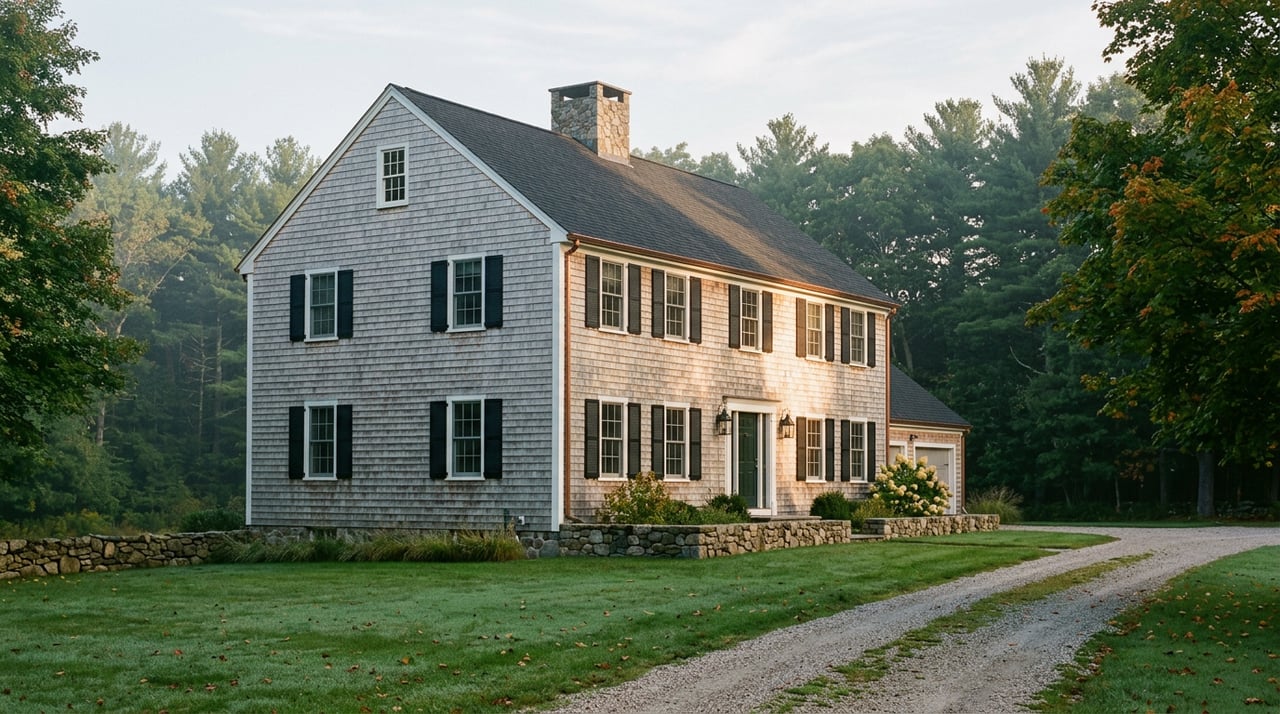
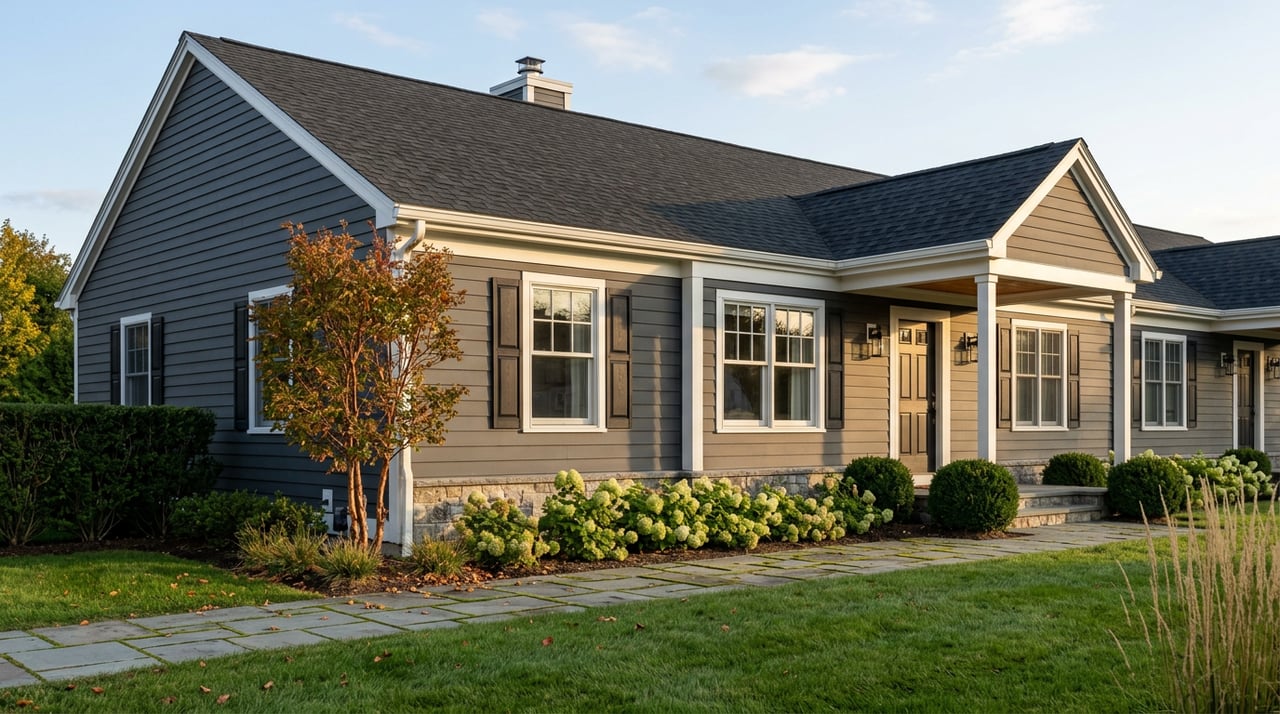
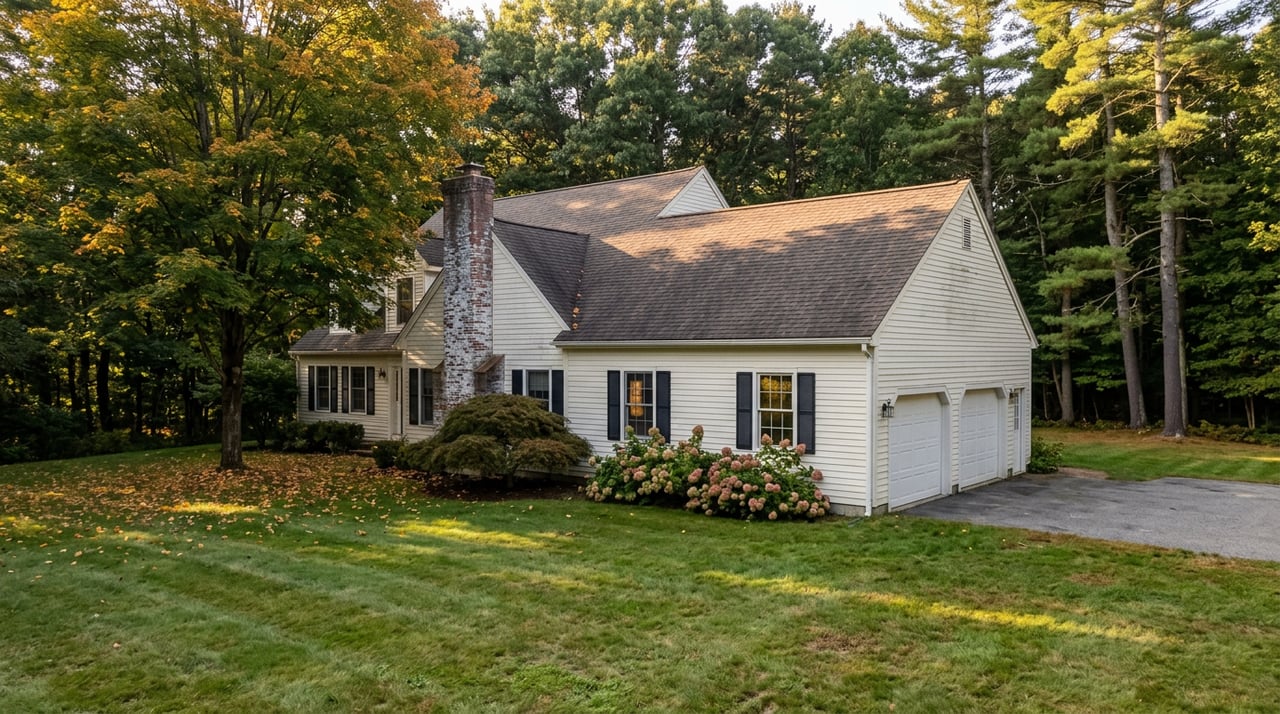
Think about what's actually been on the market. A lakefront property on Baboosic Lake, with roughly 275 feet of private shoreline and a newly installed floating dock, sits at the upper end of what closes in Amherst in a given season. So does a new build from Etchstone Properties called The Charlotte, a home that pairs a main residence with a private accessory dwelling unit. At the other end, a smaller ranch a short walk from the Milford Oval, or an older farmhouse near Amherst Village, closes for a fraction of that price.
Whichever combination happens to close in a three-month window decides where the median lands. A quarter heavy on lakefront and new construction pulls the number up. A quarter heavy on smaller homes near the village pulls it down. Neither outcome means Amherst homeowners gained or lost value overnight. It means the sample changed.
A median built from a dozen sales tells you which houses happened to close, not what the town is worth.
Sold, Modeled, and Asked Are Three Different Questions
Part of the disagreement also comes from what each site is actually counting. Redfin and Homes.com report medians from homes that have already closed, so their numbers reflect real transactions, filtered through whatever mix of homes sold that quarter. Zillow's home value index works differently. It's a model that estimates value across the entire housing stock, including homes that haven't sold recently, which is why it moves more slowly and more evenly than a sale-price median, and why its citywide figure and its Ponemah-area figure can drift apart depending on which slice of the model you're looking at. Movoto's number isn't a sale price at all. It's what sellers are currently asking, which tends to run ahead of what buyers end up paying, especially in a market where sellers are testing higher prices before conceding.
Days on market tells a similar story. Redfin's window shows homes taking 44 days to sell. Homes.com shows roughly 27 days. Movoto's June 2026 figure shows a median of 17 days. Same town, same general period, three different counts, because each is measuring a different stage of the process and a different sample of listings.
What This Means If You're Watching Amherst From Outside
If you're comparing Amherst against other Southern New Hampshire towns using whatever number the first search result hands you, that number is telling you less than it appears to. The percentage swing is a function of sample size as much as it is a function of the market. What holds up better than any single headline is looking at what specific homes actually sold and what they had in common.
A few questions get you closer to the real picture than any year-over-year percentage will:
- Was this quarter's median built from actual closed sales, or from a modeled estimate across the whole town?
- How many transactions is the number actually based on? A dozen sales and a hundred sales don't deserve the same confidence.
- What kind of homes closed? A run of lakefront or new-construction sales pulls a median up regardless of what's happening to ordinary village homes.
- Does the trend hold at the county or state level too, or is it isolated to this one town's small sample?
A Couple of Questions Worth Asking Directly
Is Amherst's housing market actually cooling in 2026? Not by the evidence available. The county and state figures around it are close to flat, with Hillsborough County down less than 2 percent and the state up about 1 percent for the same general period. Amherst's own reported swings run from a 35 percent drop to an 8 percent gain depending on the source, which points to sample volatility rather than a real shift in what homes are worth.
Which number should I actually trust? None of them on their own. A sale-price median tells you what closed. A home value index tells you a modeled estimate across the whole town. A list price median tells you what sellers are asking. Read them as three different questions rather than three attempts at the same answer, and ask what specific homes are behind whichever figure you're looking at.
Amherst's market doesn't need a single headline number to make sense of it. It needs someone who knows which homes are actually moving and why. That's the kind of read Lawrence Home Group works through with buyers and sellers across Amherst and the surrounding towns every week. Contact Us to talk through what your specific street or price range is actually doing right now.