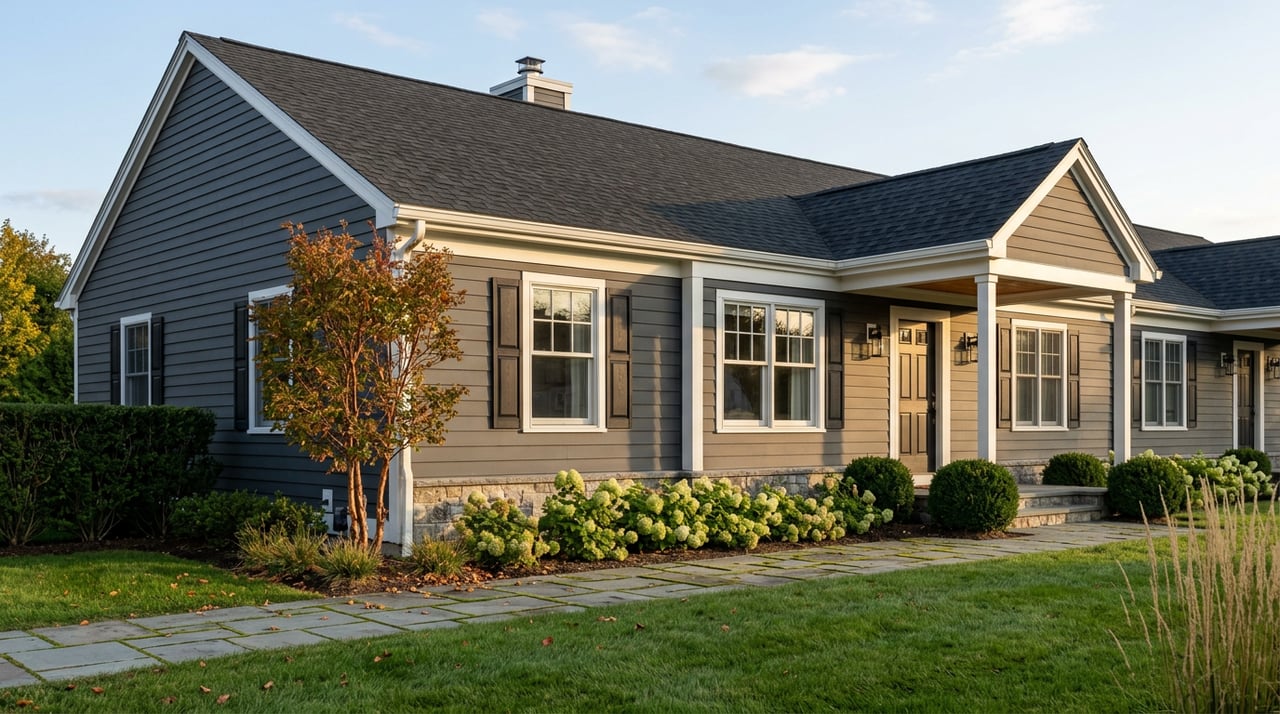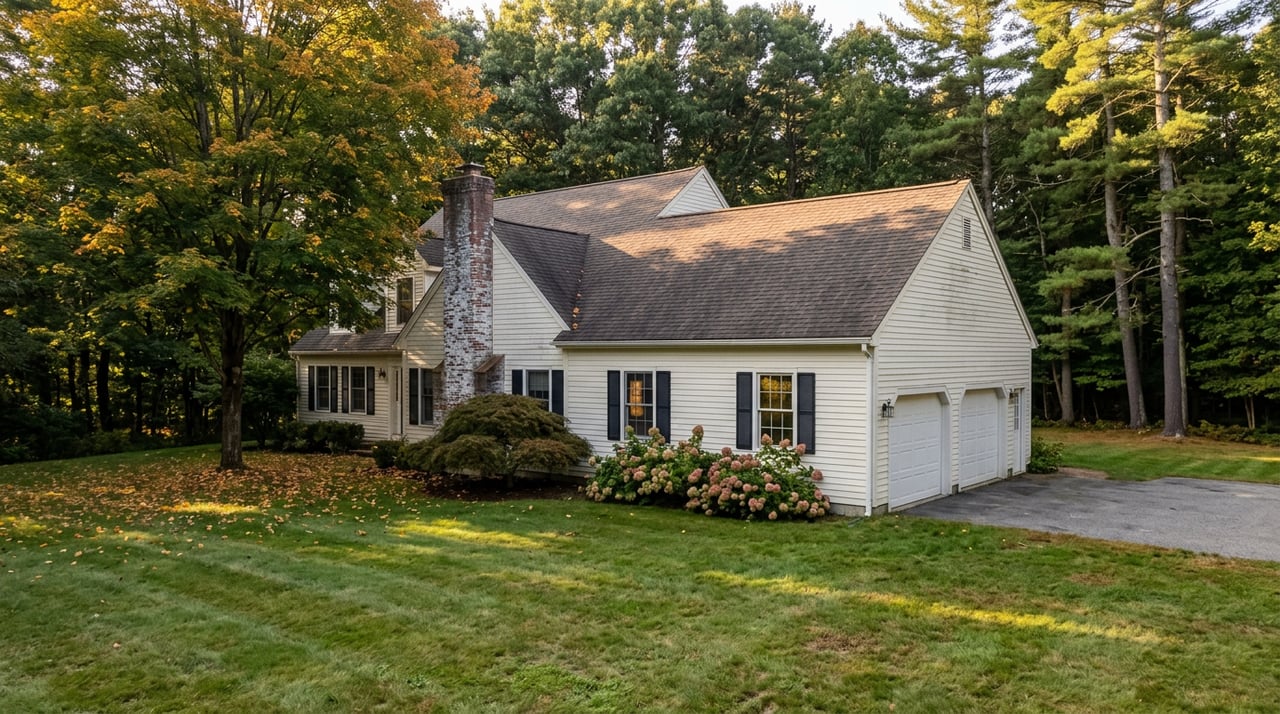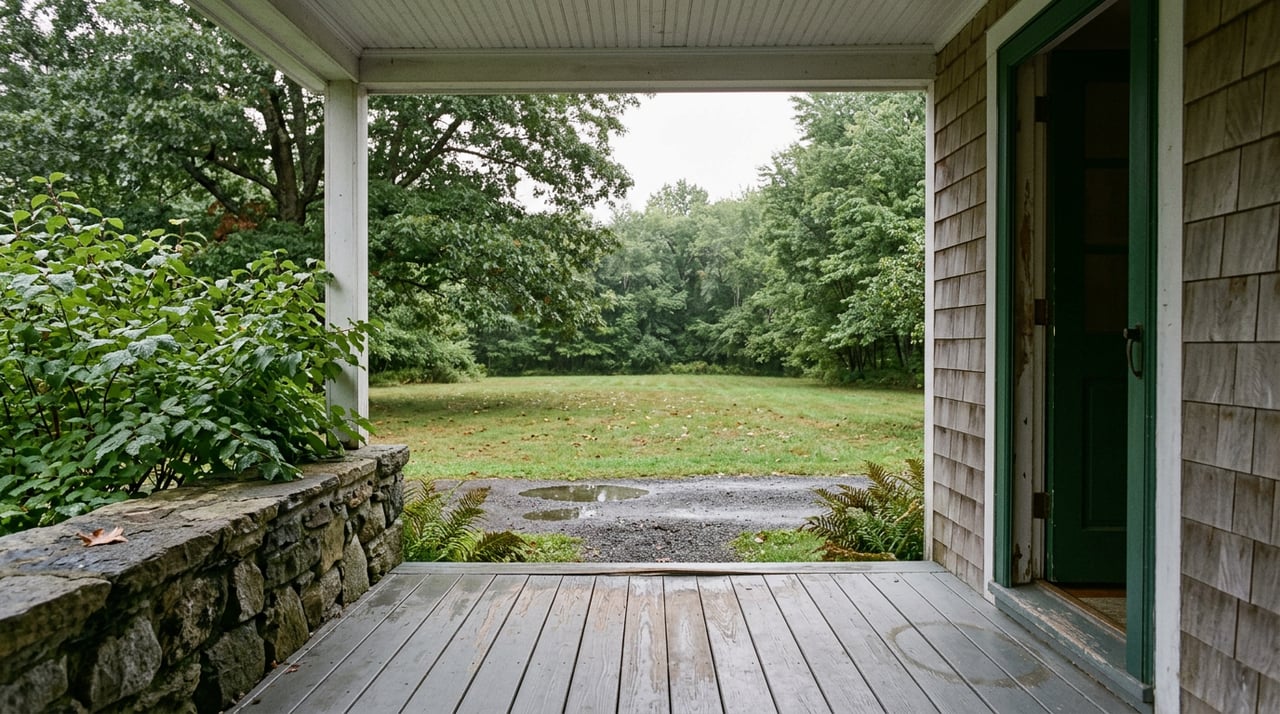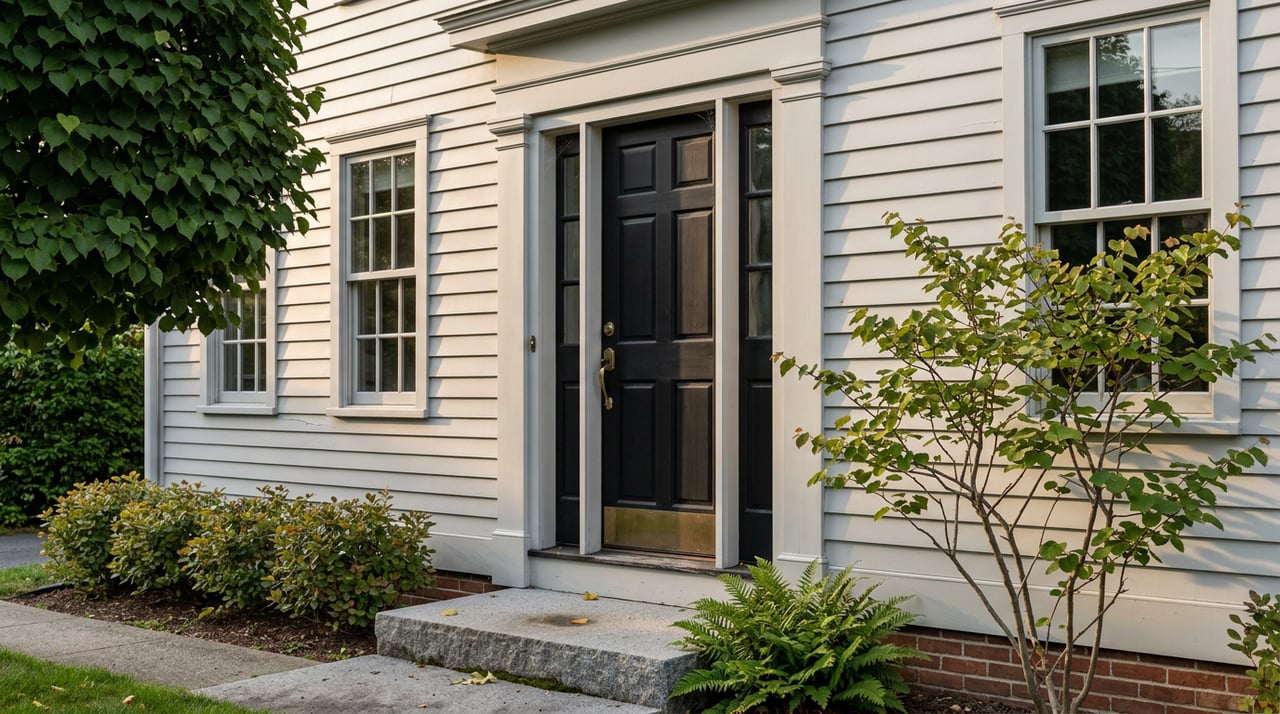
On February 19, 2026, the Amherst Village Historic District Commission sat down in the Barbara Landry Meeting Room at Town Hall to consider two applications. One came from Eric Doberstein and Robert LeBlanc at 178 Amherst Street, asking to replace fourteen windows, like for like, with no structural changes. The other was a conceptual discussion from William Glenn at 154 Amherst Street about swapping out a courtyard fence. Neither project sounds like it should need a public hearing. Both did.
If either of those had been prep work for a listing, the timeline wouldn't have been set by the contractor's schedule or the seller's target date. It would have been set by the commission's calendar, and that calendar meets far less often than most sellers assume.
The Certificate Nobody Budgets For
Amherst Village is one of the best-preserved late 18th and early 19th century village centers in New England, and the town has treated it that way since voters created the Historic District Commission at Town Meeting in March 1970. The zoning ordinance formalized the district in 1986, the town's Historic District Regulations have governed exterior work since 1991, and the village itself has been on the National Register of Historic Places since 1982.
The town states its own purpose for the commission plainly:
To preserve the architectural and historic resources of the Town of Amherst; to foster its architectural and historic character and its sense of place; to conserve property values; to strengthen the local economy; and to promote the use of the District for education, pleasure and welfare of residents and visitors.
The mechanism that carries out that purpose is a Certificate of Approval. If a property sits inside the district's boundaries, roughly bounded by Foundry Street to the north, Amherst Street to the south, Davis Lane to the west, and Mack Hill Road, Old Manchester Road, and Court House Road to the east, any exterior change to a building needs that certificate before work starts. Interior renovation is exempt. New kitchens, refinished floors, updated bathrooms, none of that goes before the commission. Windows, siding, fences, additions, and shed placements do.
That distinction matters more than it sounds like it should for anyone timing a sale. A seller can gut and stage the inside of a village home on their own schedule. The outside, the part that shows up in the listing photo and the drive-by, runs on the town's schedule instead.
What the Calendar Actually Looks Like
Here's where the friction shows up. The commission doesn't meet weekly, or even every few weeks. It meets roughly once a month, and some months it doesn't meet at all.
| 2026 Meeting Date | Status |
|---|---|
| January 15 | Cancelled |
| February 19 | Held (Doberstein/LeBlanc windows, Glenn fence) |
| March 19 | Held |
| April 16 | Held (member reappointments) |
| May 21 | Held |
| June, July | No regular meeting listed |
| August 27 | Next regular meeting scheduled |
That gap between May 21 and August 27 sits right on top of the stretch when most Southern New Hampshire sellers want their homes on the market. A homeowner who decides in June that new windows or a repainted trim color would help a village listing show better isn't looking at a few weeks of lead time. They're looking at a wait that could run into early fall before the commission even takes up the application, on top of whatever time the approved work itself takes once a certificate is in hand.
This isn't a knock on the commission. A body tasked with protecting a National Register district that includes buildings like the Congregational Church, built around 1771, is going to move deliberately. The point for a seller is simpler: the review calendar is a real constraint on your listing date, and it doesn't bend for a spring market push.
One Village Renovation Shows the Real Cost
The clearest picture of how this plays out in practice comes from an 1850s Greek Revival farmhouse in the village, renovated by longtime Amherst residents who moved from the town's outskirts into the historic district specifically for the walkable setting near the store, the library, and the town green. The renovation covered a new electrical system, central air conditioning, and window replacements, and the biggest challenge the homeowners described wasn't the design work. It was meeting the district's requirements, down to the exact dimensions the replacement windows had to match.
They got through it because one owner's family company, JB Sash and Door Company in Chelsea, Massachusetts, specializes in historically accurate custom windows. Interior work, including a full kitchen renovation with the timber and wide-plank pine details the house is known for, went through Capital Kitchen & Bath in Concord with no district review at all, because interior work doesn't trigger one.
That split, historically compliant materials for anything visible from the street, ordinary contractors for everything inside, is the practical shape of what a village seller is actually navigating. It's not one big approval. It's a line drawn at the exterior wall, and the vendor you need depends entirely on which side of that line the work falls.
Building the Approval Into Your Listing Timeline
For a seller inside the district weighing exterior updates before going on market, the sequence that avoids getting caught by the calendar looks like this:
- Call Amherst's Community Development Department early, at 603-673-6041 ext. 206, before booking any exterior contractor. Ask directly whether your planned work needs a Certificate of Approval.
- Read the town's Historic District Regulations and Guidelines before you draw up plans. The town's own introduction to those guidelines notes that familiarity with the material early on helps a project move through approval faster and saves applicants time.
- Check the current commission meeting schedule before you set a listing date, not after. The town updated its Community Development fee schedules on August 10, 2026, a reminder that costs and procedures here can shift, so confirm current figures directly with the office rather than relying on an old number.
- Separate your prep list into interior and exterior columns. Anything interior can move on your timeline. Anything exterior needs to move on the commission's.
- If the work is minor and reversible, like a fence or paint color, ask staff whether it genuinely needs full review or can be handled administratively. Not every exterior change requires the same level of process.
None of this is a reason to avoid buying or selling in the village. It's one of the more distinctive corners of Amherst for exactly the reasons the commission exists to protect: the fieldstone walls, the Federal and Greek Revival architecture, the sense of arriving somewhere with real history intact. It's a reason to build the calendar into the plan instead of discovering it after a contractor is already scheduled.
A Few Questions Worth Asking Directly
Does repainting the same color still need approval? Ask the Community Development office directly. Some like-for-like maintenance is treated differently than a change in color or material, and staff can tell you before you buy the paint.
What if my home is in Amherst but not inside the historic district boundary? None of this applies. The district covers a specific mapped area in the village center, not the whole town, so confirm your parcel's status with the town rather than assuming based on the house's age.
Does staging furniture or a temporary sign count as exterior work? Staging and temporary marketing materials are not the kind of structural or material change the commission reviews. The review is aimed at permanent changes to the building and grounds, not how you present the home for showings.
If you're weighing a village-area sale and want to know what a realistic prep timeline actually looks like once the district's calendar is factored in, that's exactly the kind of planning Lawrence Home Group works through with sellers before a listing date ever gets set. Contact us and we'll walk through your specific property and timeline together.