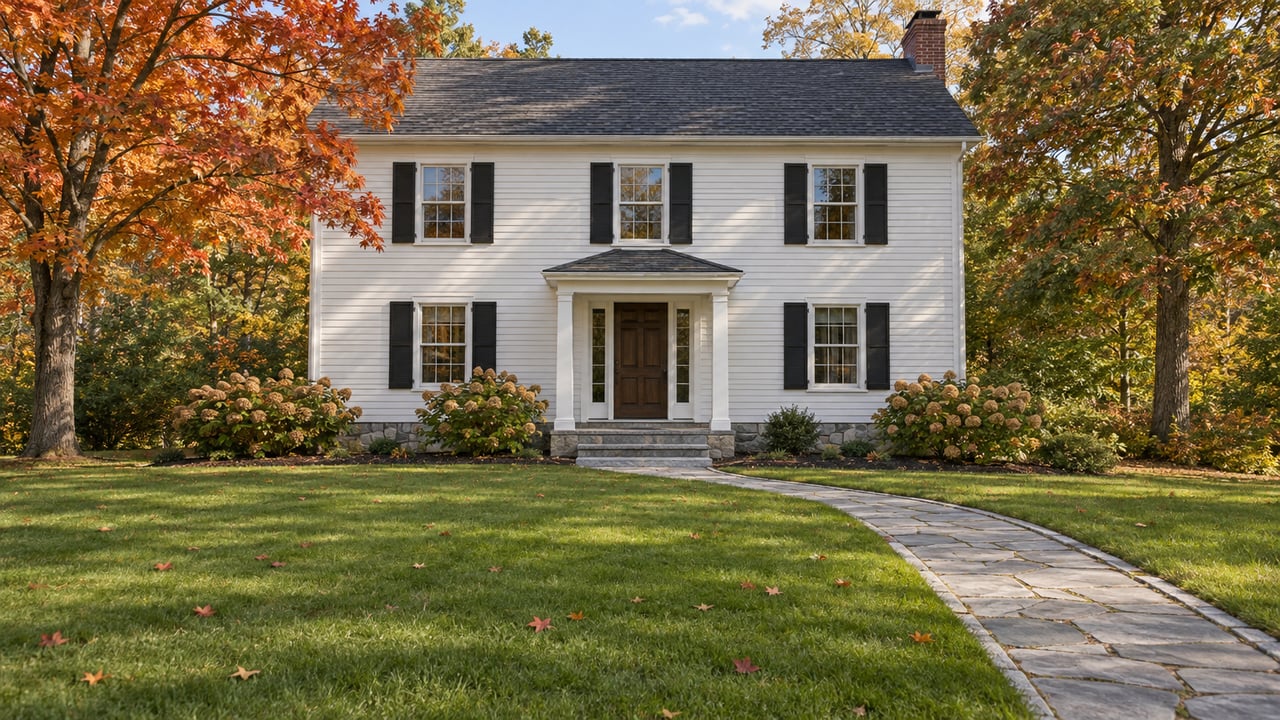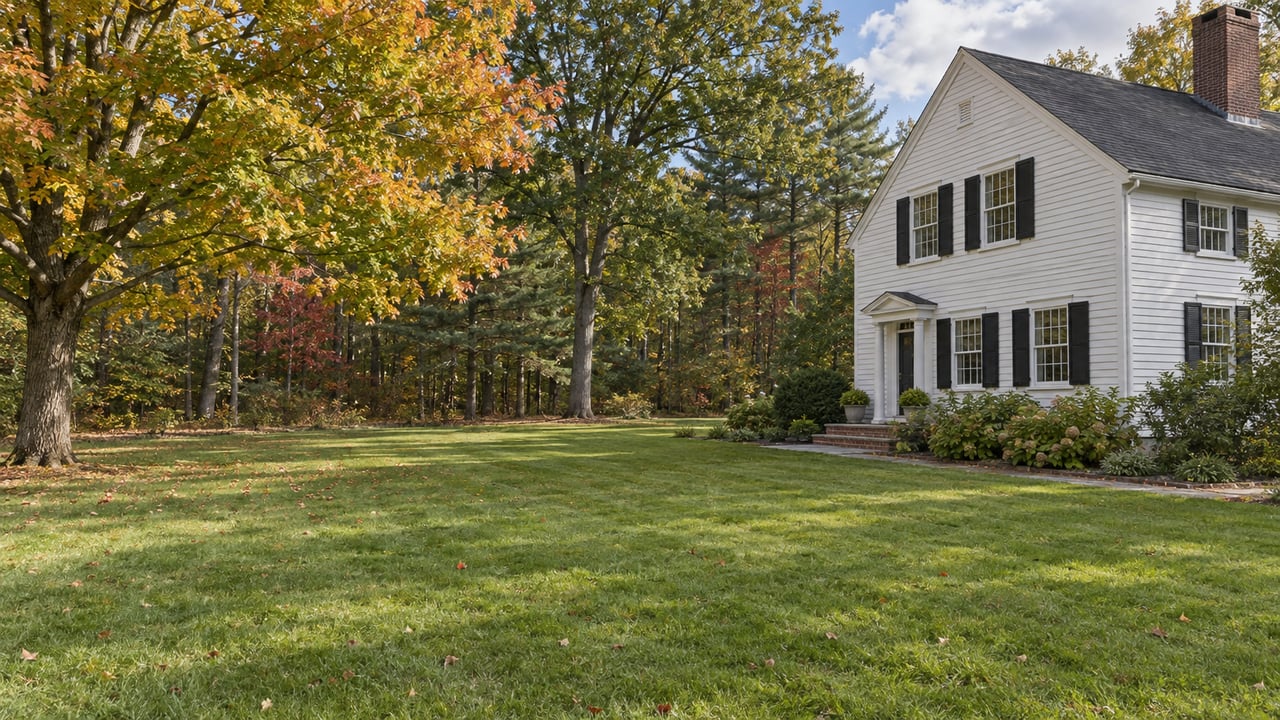
A five-acre parcel in Hollis reads like plenty of room. Space for a wide driveway, a barn, a stand of white pine left standing behind the house. But the Town of Hollis doesn't measure a lot in total acres when it decides what you're allowed to build. It measures acreage that qualifies as buildable, and that number is almost always smaller than what's printed on the listing sheet.
That gap is not a technicality. It's the reason acreage sales in Hollis tend to move slower than the town's other listings, and it's the first thing worth understanding before you write an offer on land here, whether you're buying five acres or selling twelve.
The Number on the Listing vs. the Number in the Ordinance
Most of Hollis sits in the Residential and Agricultural zone or the Water Supply Conservation zone, where the zoning ordinance sets a minimum of two acres per dwelling unit. That's the number most buyers hear first, and it's the one that shapes the town's low-density character: wide setbacks, mature tree cover, and neighbors who aren't visible from your kitchen window.
But the ordinance draws a separate line around what actually counts toward that minimum. A lot is only "buildable" if it contains at least one and a half contiguous acres of acceptable land that isn't cut up by utility easements or rights-of-way. Two acres of raw parcel with a power line easement running through the middle might not clear that bar even though the deed says two acres.
Backland lots, meaning parcels reached by a private driveway rather than direct road frontage, have no structure permitted closer than 200 feet to an existing home on neighboring land.
There is one path around the standard math. Under the town's Open Space Planned Development option, individual lots can be smaller when the overall project meets density and open-space requirements. It's the reason a few newer Hollis subdivisions feel tighter than the surrounding countryside while the town's overall density stays exactly where the ordinance intends it to stay.
| Lot Type | Minimum Requirement |
|---|---|
| R&A or WSC zone, standard lot | 2 acres per dwelling unit |
| Backland lot (residential) | No structure within 200 feet of an existing home |
| Buildable lot, any zone | 1.5 contiguous acres of acceptable land, free of easements and rights-of-way |
| Open Space Planned Development | Individual lots as small as Smaller individual lots subject to project-wide density and open-space requirements |
What Actually Eats the Acreage
Two things typically separate deed acreage from buildable acreage in Hollis: wetlands and septic siting.
Wetlands don't announce themselves on a plat map the way an easement does. A parcel can look uniformly wooded and still hold a seasonal wet area that a soil scientist would flag during a site walk. The only way to know before you're under contract is to ask whether a wetlands delineation has been done, and if not, to build time for one into your due diligence period.
Septic siting works on top of that. Under New Hampshire's subsurface disposal rules, a septic system has to be designed, sited, and approved by a state-licensed designer before construction, and that design depends on where the soil actually percolates well, not where the owner would prefer the leach field to go. Wells add another constraint on the same footprint: New Hampshire Department of Environmental Services guidance calls for a minimum 75-foot separation between a well and a septic tank or drain field for typical residential design flows, and local setback rules can push that further depending on the parcel. On a lot where the buildable envelope is already tight, the septic system and the well end up negotiating for the same corner of the property.
The Town of Hollis has made archived septic design plans searchable online, which is worth checking on any parcel with an existing structure. A septic system approved decades ago under older standards may need updating, and knowing that going in changes how a buyer times their offer.
Why This Shows Up in Days on Market, Not the Asking Price
The acreage-versus-buildable gap doesn't usually change what a Hollis property is priced at. It changes how long the property takes to sell.
In the three months ending June 2026, homes in the 03049 zip code sold for a median of $932,000, up 8.4 percent from the same period the year before. But the pace slowed at the same time the price climbed: homes were averaging 35 days on market by June 2026, more than double the 15 days typical a year earlier, and the number of homes sold that month dropped to 19 from 23. A market that's still appreciating but taking longer to sell is exactly what you'd expect when more of the pending transactions involve the kind of due diligence that acreage and septic siting require.
That slowdown isn't distributed evenly across every listing. In a market where the typical sale now takes 35 days, the properties carrying the most acreage, the oldest wells, or septic systems due for a second look are the ones most likely to need every one of those days and then some, since a septic design review or a wetlands question can delay a sale long after the rest of the file is ready.
What This Means If You're Buying Land in Hollis
Ask for the buildable footprint before you fall in love with the total acreage. If a septic design or test pit hasn't been done, request one as a condition of your offer rather than discovering the constraint after your inspection period has already started ticking. A well water test, typically in the range of $150 to $400, belongs in that same window alongside a septic evaluation, since New Hampshire's granite bedrock is known to release arsenic and radon into groundwater in some areas, and either issue is far easier to negotiate before you've removed contingencies than after.
If you're comparing a standard two-acre lot against a backland parcel, remember the backland option has different requirements, so the total lot size on paper isn't a fair comparison unless you also compare buildable footprint.
What This Means If You're Selling a Larger Parcel
The single most useful thing a seller of Hollis acreage can do before listing is have the buildable footprint established ahead of time: a current septic design, a wetlands check if the parcel has any low or seasonally wet ground, and a clear answer on whether the existing system meets current standards or will need updating at time of sale. Buyers who see that groundwork already done can move through their own diligence faster, which is often the difference between selling near the town's 35-day average and sitting on the market well past it.
A Couple of Questions Worth Asking Directly
Does every acre on a Hollis land listing count toward the town's two-acre minimum? Not automatically. The town's two-acre minimum and its separate 1.5-acre buildable-land threshold are distinct. Only acreage that is contiguous and free of easements or rights-of-way counts toward the 1.5-acre buildable threshold the ordinance requires, so a parcel with a utility corridor running through it may have less usable land than the total acreage suggests.
Can a larger Hollis parcel be split into more than one buildable lot? It depends on whether each resulting lot can independently meet the two-acre minimum, the frontage requirement, and the buildable-land definition, including room for its own septic system and well. That's a question worth bringing to the Hollis Planning Department before assuming a subdivision is possible.
If you're weighing a wooded parcel in Hollis, or getting ready to list one, Lawrence Home Group can walk the specific numbers with you before you write or accept an offer.
This article is general information, not legal, tax or financial advice. Consult a qualified professional about your situation.