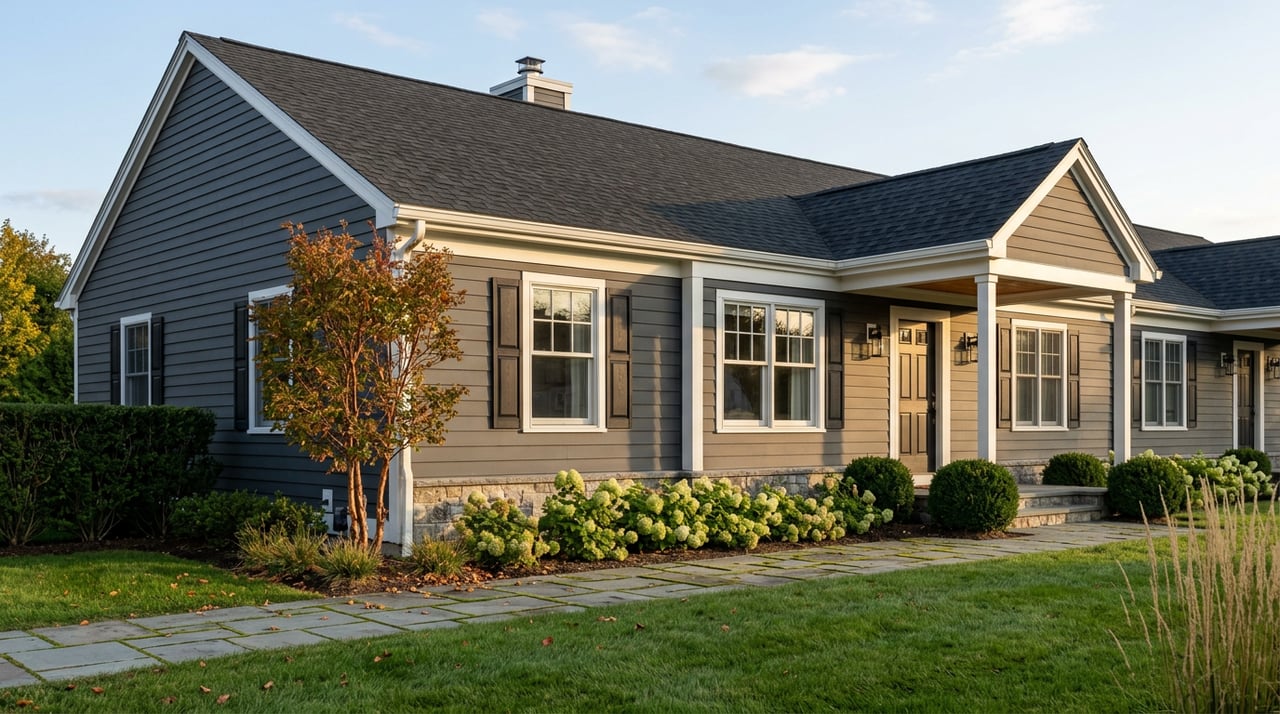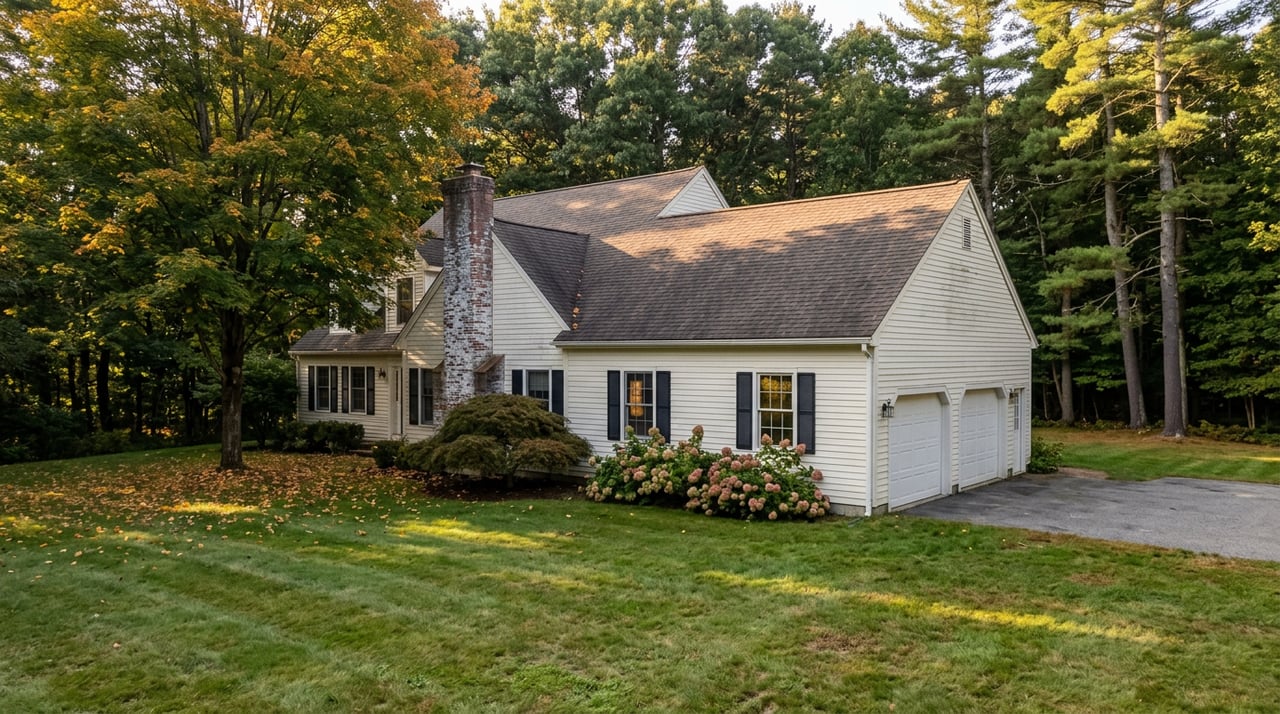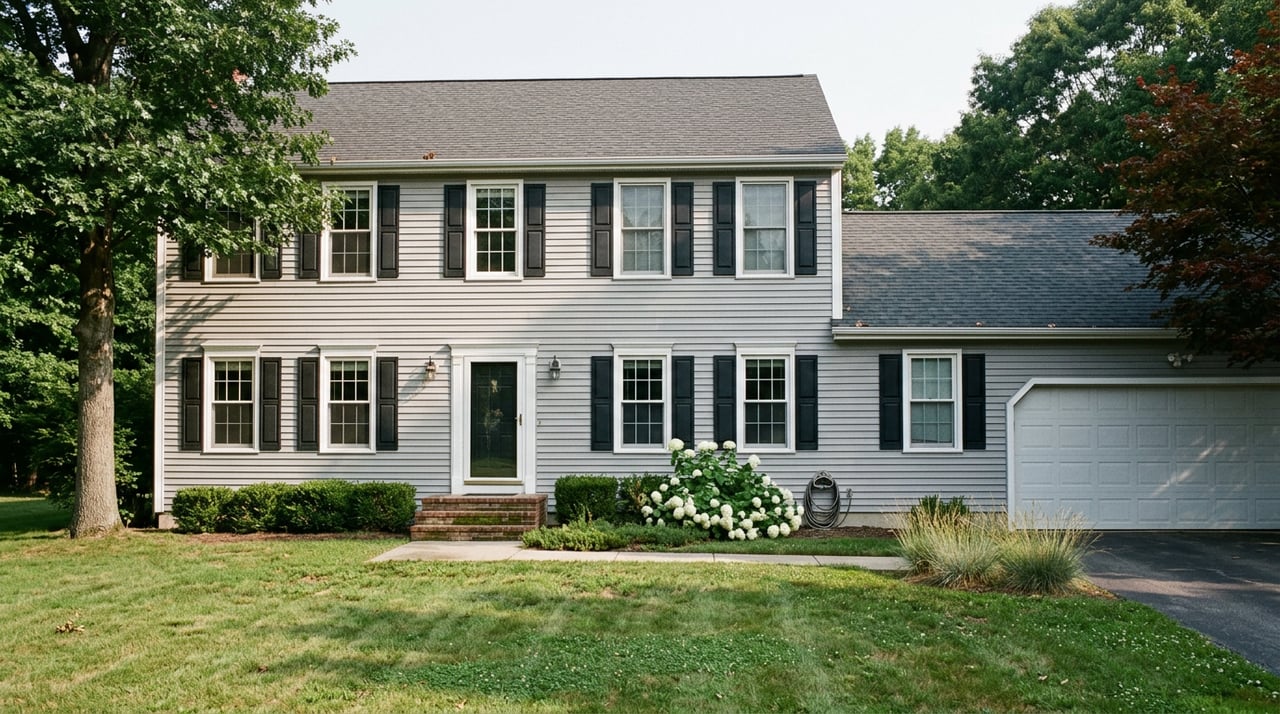
A house in Merrimack often lists for $300,000 less than a comparable one in Bedford. That part of the story checks out. What surprises most buyers who run the numbers is what happens when you stop comparing sale prices and start comparing tax bills, because the town everyone assumes is the expensive one for property taxes is not necessarily the town that costs more once you measure it correctly.
Merrimack's total property tax rate for 2025 sits at $22.11 per $1,000 of assessed value. Bedford's is $16.49. On paper, that makes Merrimack look like the pricier place to own, roughly a third higher. But that comparison is measuring the wrong thing, and Merrimack is in the middle of a process this year that is about to make the old comparison obsolete anyway.
The Number Everyone Runs First
Bedford's year-to-date median sale price for a single-family home reached $815,000 as of October 2025, according to the New Hampshire Association of Realtors, reported by the Union Leader. Merrimack's typical home value has been running well below that. One widely used home-value index put Merrimack's average at $536,063 as of May 31, 2026, up 3.1 percent over the prior year, still hundreds of thousands below Bedford's figure. That gap is real. A family choosing between the two towns on price alone will find meaningfully more house, or meaningfully more money left over, in Merrimack.
Then the tax rate enters the picture, and the instinct is to multiply it against the price and call it a day. That instinct is where the comparison breaks down.
The Rate Comparison That Misleads
Here is what the same Union Leader reporting shows for Bedford: the state Department of Revenue Administration set Bedford's rate at $16.49 per $1,000, up 68 cents from the prior year. On the town's $815,000 median-priced home, that works out to a tax bill of about $13,450 a year. Divide the bill by the price and you get roughly 1.65 percent, which is close enough to the nominal rate that Bedford's assessed values are clearly tracking close to full market value.
Merrimack's own Assessing Department publishes a different number alongside its rate: an equalized ratio of 67.9 percent for 2025. That ratio measures how close the town's assessed values sit to actual market value. Bedford is assessing near 100 percent. Merrimack is assessing at roughly two-thirds.
Run that ratio against Merrimack's $22.11 rate and the real story changes. A home assessed at 67.9 percent of a $500,000 market value comes in around $339,500 in assessed value. At $22.11 per $1,000, that produces an annual bill near $7,500, an effective rate of about 1.5 percent of market value. That is lower than Bedford's 1.65 percent, not higher.
The headline rate said Merrimack costs more. The math, using the town's own published ratio, says the opposite.
Why the Rate Looks Inflated
A tax rate is a fraction: the budget a town needs to raise, divided by the total value of everything it can tax. When the denominator, the assessed value base, lags behind real market value, the rate has to climb just to raise the same dollars. Merrimack last completed a full value update on April 1, 2021. Home values across southern New Hampshire have moved considerably since then. Bedford, by contrast, appears to be keeping its assessed values current with the market, which is why its rate and its effective burden line up almost exactly.
None of this means Merrimack's town government spends recklessly. Town Manager Paul Micali made that point directly while presenting the proposed 2026-2027 budget in December 2025, noting that the municipal portion of Merrimack's bill currently represents only about 20 percent of the total, with school and county costs making up the rest.
"The other components of the tax rate are on the high side."
The town-controlled slice of Merrimack's rate is $4.38 per $1,000. Local and state school taxes together account for $16.40, and the county adds $1.33. Micali's council was weighing a proposed increase in just the municipal portion, from $4.38 to $4.77, which would add roughly $234 to the town's share on a $600,000 home. Even with that increase, the town-controlled piece stays a small fraction of the total bill.
Why This Is Not a Normal Year to Run This Comparison
Merrimack is currently in the middle of its first full town-wide revaluation since that 2021 update. The state's Department of Revenue Administration lists Merrimack on its official 2023-2027 assessment review schedule for 2026, and the town's own Assessing Department confirms the goal: bring all property assessments to 100 percent of market value as of April 1. The town posted a notice of preliminary assessment values on July 9, 2026, meaning property owners across Merrimack have already started seeing what their new numbers look like.
Once that base catches up to full market value, the arithmetic that produces the $22.11 rate no longer applies. The same budget divided by a much larger assessed base should push the nominal rate down, likely closer to what Bedford already shows. That does not mean everyone's dollar bill drops. A revaluation redistributes the tax burden based on how much each property's value moved relative to the town average since 2021. A home that appreciated faster than the Merrimack average will absorb a bigger share of the total levy even as the headline rate falls. A home that lagged the average could see its dollar bill shrink.
If you are comparing towns or closing on a home in Merrimack this fall, the rate quoted today is a snapshot of a system in transition, not a stable number to plan a decade of ownership around.
What This Means If You're Buying in Merrimack This Year
A few practical steps worth taking before you sign anything:
- Ask the seller whether the specific property has already received its 2026 preliminary assessment notice, and if so, what the new number shows compared to the current assessed value.
- Ask when the new tax rate is expected to be finalized. Merrimack's own assessing office notes that new rates are typically set in October, right in the middle of fall closings.
- Compare towns using an effective rate, the actual bill divided by actual sale price, rather than the raw per-$1,000 number. Bedford and Merrimack's raw rates tell a misleading story on their own.
- Remember that the town's spending priorities and the assessment cycle are two different things. A high nominal rate can mean a town spends more, or it can simply mean the town hasn't updated its values in a while. Merrimack, this year, is mostly the second case.
The Comparison That Still Holds
Strip away the rate confusion and the underlying price gap between the two towns remains genuine. Bedford's homes sell for hundreds of thousands more than Merrimack's, and that difference in purchase price is unlikely to close because of a revaluation. What changes is the confidence you can put in the tax-rate comparison people run to justify that price gap. The $22.11 versus $16.49 headline overstates how differently these two towns actually cost to own. Once Merrimack's assessment base catches up this year, that headline number should shrink toward Bedford's on its own, without the underlying cost of living there changing much at all.
A Couple of Questions Worth Answering Directly
Does a revaluation mean my taxes are going up? Not automatically. Merrimack's own assessing office is clear that the assessor's job is to estimate value, not set the tax rate, and that the rate itself is calculated from the town, school, and county budgets divided by the new total value. Your bill moves based on how your property's value shifted relative to the town average, not simply because the town updated its records.
Is Merrimack still the more affordable town after all this? On sale price, yes, clearly. On the effective tax burden relative to home value, the town's own published numbers suggest Merrimack may already be at or below Bedford, once you correct for the outdated assessment base. That comparison should get easier to read, not harder, once the 2026 revaluation is final.
If you are weighing Merrimack against Bedford, Amherst, or another Southern New Hampshire town this year, the price tag and the tax rate rarely tell the same story on their own. Lawrence Home Group walks buyers and sellers through both sides of that math, town by town, before you make an offer. Contact Us to talk through what a specific property's numbers actually mean for your move.